


Inventory accuracy: What it is, why it matters and how to improve it
12 May 2026Inventory accuracy reflects how closely warehouse records match actual stock on hand. We explore its importance, the metrics used to assess it and ways to improve it.



Explore the Mecalux blog and learn more about the latest methods for warehouse space optimisation, how to improve inventory management, automated material handling equipment & software.
Inventory accuracy reflects how closely warehouse records match actual stock on hand. We explore its importance, the metrics used to assess it and ways to improve it.

Inventory record accuracy is a metric that measures the alignment between the data recorded in a company’s system and the actual physical stock in the warehouse.
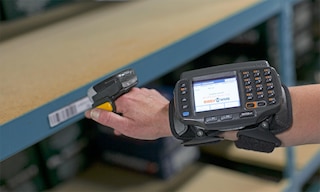
A ring scanner is a data-capture device worn on a user’s finger and secured with a strap, enabling hands-free work.

A data flywheel converts data into a continuous learning cycle that drives operational improvement. In logistics and manufacturing, it improves processes and creates a competitive advantage.

Little’s Law is a theorem that establishes a relationship between the three primary variables of a stable environment. It is used to estimate queuing processes within companies.

Cycle time shows how long it takes to complete a process. Measuring and optimising this metric helps reduce costs, eliminate inefficiencies and improve productivity in manufacturing and logistics.

Warehouse ventilation keeps the air clean and temperature stable. Correct planning protects goods and personnel while optimising efficiency in industrial facilities and automated warehouses.
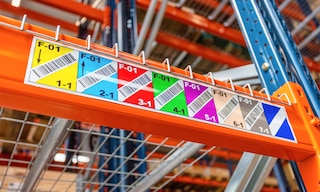
Rack labels are signage elements used to identify and classify storage locations in warehouses.